Announcements

00000
Holy Unction Tuesday March 31 at 2pm - 03/16/26

Holy Unction will be served this year on Tuesday March 31 at 2pm

00001
March 16, 2026 Pannikhida for Metropolitan Laurus 12:30PM - 03/15/26

On March 16, at 12:30PM a pannikhida for Metropolitan Laurus will be served in the main cathedral.

00002
Northern Lenten Retreat March 16-18 - 02/22/26

Where: Holy Trinity Monastery – 1407 Robinson Road, Mohawk, NY 13407

When: March 16-18, 2026. Retreat officially begins on Tuesday, March 17; Midnight Office at 5:00 AM. Monday, March 16 is designated as a travel day – Supper at 7:00 PM, followed by 7:30 PM Great Compline.

Cost: Registration cost is $150 per person and does not include lodging accommodations.

Schedule: Click here.

Who can attend: Clergy (deacons and priests) of the Eastern American Diocese, as well as attendees of Holy Trinity Seminary. All others please contact diocesan office at (201) 940-7340 or office@eadiocese.org to inquire about attending the retreat.

Lodging:

Monastery Guesthouse
1407 Robinson Road
Mohawk, NY 13407
(315) 858-0131

Red Roof Inn & Suites
100 Marginal Road
Herkimer, NY 13350
(315) 866-0490
www.redroof.com/property/NY/Herkimer/RRI338

Airport: Those who wish to fly to Jordanville must fly to Albany International Airport (ALB) and send their flight information to Abbot Cyprian (Alexandrou) at fathercyprian@gmail.com in order to arrange for pick-up and drop-off.

Services: All clergy will concelebrate with His Eminence Nicholas, Metropolitan of Eastern America & New York, and His Grace Luke, Bishop of Syracuse, at the Hierarchal Liturgy of the Presanctified Gifts in Holy Trinity Cathedral on Wednesday, March 18. Clergy are asked to bring their own black vestments.

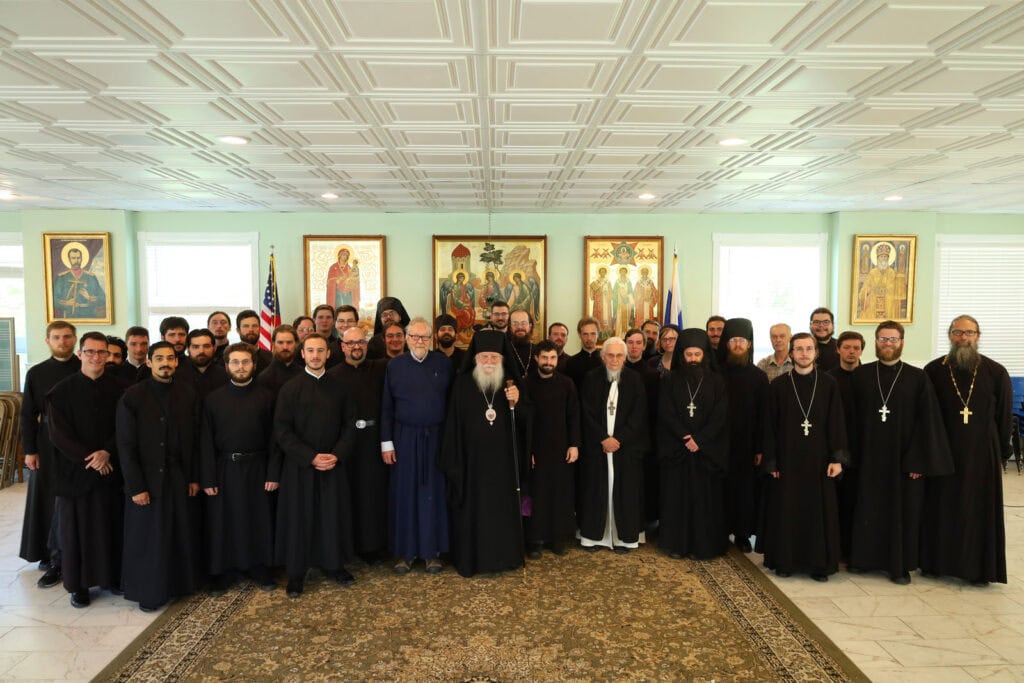
Speaker: The main speaker at the Lenten retreat will be Archimandrite Peter (Karakozoff), Bishop-elect of Seattle. The retreat will likewise feature a roundtable discussion on pastoral questions and more. Seminarians will be invited for part of the discussions.

Registration: Click here for registration


00003
February 12, 2026 Hierarchical Consecration of Hieromonk Spyridon (Gusakov) - 12/31/25

On the feast of the Three Holy Hierarchs, the hierarchal consecration of Hieromonk Spyridon (Gusakov) will take place at Holy Trinity Monastery.

Wednesday February 11  (gold vestments)

5PM Nomination and Proclamation of the Bishop
7PM Vigil

Thursday February 12 (gold vestments)


9AM Hierarchical Liturgy and Consecration of Hieromonk Spyridon


00004
February 15, 2026 Hierarchal Consecration of Archpriest Michael Crowley - 12/31/25

On the feast of the Meeting of the Lord,, the hierachal consecration of Archpriest Michael Crowley (monastic tonsure pending) will take place at Holy Trinity Monastery

Saturday February 14 (blue vestments)

5PM Nomination and Proclamation of the Bishop
7PM Vigil


Sunday February 15 (blue vestments)

9AM Hierarchical Liturgy and Consecration of Archpriest Michael Crowley  

ORTHODOX LIFE

Daily Readings

Prologue of Ochrid

The Prologue from Ohrid: March 4

1. THE VENERABLE GERASIMUS

This remarkable and famous saint first learned about the ascetical lifein the Egyptian Thebaid. He then went to the Jordan and there founded a community in which there were seventy monks. This community still exists today. He instituted a special Constitution [Rule] for his monastery by which the monks spent five days in their cells weaving baskets, reeds and rush mats. They were never allowed to light a fire in their cells. For five days they ate only a little dry bread and dates. The monks were required to keep their cells open so that when they went out, anyone could enter and remove whatever he needed from their cells. On Saturdays and Sundays they gathered in the monastic church. They had a common meal with a few vegetables and a little wine to the glory of God. Each monk would then bring in and place before the feet of the abbot that which he had made during the past five days. Each monk had only one robe. St. Gerasimus was an example to all. During the Great Lenten Fast he did not eat anything except what he received in Holy Communion. On one occasion, he saw a lion roaring from pain because there was a thorn in his paw. Gerasimus drew near to the lion, crossed himself, and removed the thorn in the animal's paw. The lion became so tame that he returned with Gerasimus to the monastery and remained there until the elder's death. When Gerasimus died, the lion succumbed from sorrow for him. Gerasimus attended the Fourth Ecumenical Council [Chalcedon, 451 A.D.] during the reign of Marcian and Plucheria. Even though in the beginning, Gerasimus leaned toward the Monophysite heresy of Eutyches and Dioscorus, he was a great defender and champion of Orthodoxy at the Council. St. Euthymius dissuaded him from this heresy. Of all of the disciples of Gerasimus, the most famous was St. Cyriacus the Recluse. St. Gerasimus died in the year 475 A.D., and was translated into the eternal joy of his Lord.

2. THE HOLY MARTYRS PAUL AND JULIANA

Paul and Juliana were brother and sister from Ptolemais in Phoenicia. They were brutally tortured for the sake of Christ by the Emperor Aurelius and were finally beheaded. Before their martyrdom many of their miracles were manifested, and were witnessed by many pagans. Through these miracles, many of the pagans were converted to the Faith. Several of these were beheaded and received their wreaths in the year 273 A.D.

3. SAINT JAMES THE FASTER

He lived in the sixth century. He was so perfected in pleasing God that Jamescured the most gravely ill through his prayers. But the enemy of mankind lured him into great temptations. At one time, an immoral woman was sent to him by some scoffers. She misrepresented herself to James, pretending to be crying yet all the while luring him into sin. Seeing that he was going to yield to sin, James placed his left hand into the fire and held it there for some time until it was scorched. Seeing this, the woman was filled with fear and terror, repented and amended her life. On another occasion, James did not flee from his temptation, but rather he succumbs to a maiden, who was brought as alunatic by her parents to be cured of her insanity. He, indeed, healed her and after that, sinned with her. Then in order to conceal his sin he killed her and threw her into a river. As is common, the steps from adultery to murder are not too distant. James lived for ten years after that as a penitent in an open grave. At thattime there was a great drought which caused both people and live-stock to suffer. As a result of his prayers, rain fell; James knew that God had forgiven him. Here is an example, similar to that of David, of how twisted is the demon of evil; how by God's permission, the greatest spiritual giants can be overthrown, and through sincere and contrite penance, God, according to His mercy, forgives even the greatest sins and does not punish those when they punish themselves.

HYMN OF PRAISE

SAINT JAMES THE FASTER

Who from the greater height falls, is injured more,

To the heights whoever is lifted, let him cautiously shield himself.

The holy apostle writes: "Whoever thinks that he is standing secure

should take care not to fall," (*) let him fear God.

James the Faster, according to the height of his soul, a giant was he,

But, he, from the heights slipped, and the devil toppled him;

One sin, to the other hastens, adultery rushes to murder,

James the Faster, himself, punishes, and God comforted him.

All virtues, one sin, is able to erode;

One hole in the granary, all the wheat pours out.

A house filled with fragrances, one handful of filth

Empties it of redolence and fills it with stench.

One-hundred victories nor one-hundred celebrations do not help

When in the final battle, the head is lost.

The spiritual life is a struggle against the hordes of the devil,

In this battle, from the beginning the proud are defeated.

Whoever invokes the Name of God with profound humility

That one, in battle, will be protected by God's mercy.

(*) I Corinthians 10:12

REFLECTION

If the philosophies of men were able to satisfy man, why did the philosophers Justin and Origen become Christians? Why did Basil, Chrysostom and Gregory, who in Athens studying all the philosophy of the Greeks, receive baptism? And why didBlessed Augustine, who knew the wisdom of both the Greeks and the Romans, throw away all and seek salvation and illumination in the Faith of Christ? And St. Clement of Rome, who was very wealthy and very learned? And St. Catherine, who was from the royal house and knew all the worldly wisdom of the Egyptians? And the young Crown Prince Joasaph in India, to whom was known all the Indian philosophies? And many, many more who primarily sought explanations to the puzzles of the world and illumination for their souls in philosophy and, after that, entered the Church and worshipped the Lord Christ?

CONTEMPLATION

To contemplate the Mystery of Communion as the presence of our Lord Jesus in the Church on earth:

1. As the fulfillment of His promise, "And behold, I am with you always until the end of the age" (St. Matthew 28:20).

2. As His constant support of the faithful, to whom He said, "Without me, you can do nothing" (St. John 15:5).

HOMILY

About Pilate's wavering

"Consequently, Pilate tried to release Him, then, hehanded Him over to be crucified" (St. John19:12,16).

From where does this contradiction in Pilate stem? From where is this dual will in one and the same man? While he stood under the radiant face of Christ, Pilatefrom all his heart wanted to release the Just Man. But, when the darkness of the Jews overcame him, he agreed to the works of darkness. This is the seed [Jesus Christ], fallen among the thorns. While the face of Christ shown on the seed, the seed took root, but as soon as the seed was left without this light, the darkness of the thorns smothered it. When the Lord Jesus authoritatively spoke to Pilate of the Heavenly Kingdom, saying to him, "You would have no power over Me, if it had not been given to you from above" (St. John 19:11), Pilate then felt overcome by the fear of God. But when the masses of the Jews cried out to Pilate, "If you release Him, you are not a friend of Caesar" (St. John 19:12), then Pilate was overcome with fear from the worldly king. His fear for the body overcame his fear for his soul, as it happens occasionally, even today. Pilate was a disciple of worldly wisdom. Worldly wisdom does not offer strength but instills fear. Worldly wisdom does not sustain the soul but the body. Worldly wisdom does not instill fear for the soul but fear for the body and all that is physical. Here, in Pilate, we see an obvious and a pathetic example of what kind of men worldly wisdom produces and educates, sidestepping God and going against Christ. Pilate's weak character and wavering soul is a picture, not only of pagans, but also of weak Christians. Certain Christians daily, imperceptibly and, more often,unconsciously, would for a while like to eliminate Christ from the darkened and evil instinct of the Jews within themselves. Then, at other times, they would like to abandon Him to that instinct for crucifixion. This always happens when a Christian transgresses some of the commandments of Christ for the sake of fulfilling some of his own physical desires. For a moment, that commandment enlightens the heart of a wavering Christian and again, for a moment, the physical darkness overcomes him so much that he completely succumbs to it. O Lord, long-suffering, do not turn away the radiance of Your face from us even for one twinkling of the eye, so that the darkness does not overcome us.

O Lord help us that we will remain children of the light until the end.

To You be glory and thanks always. Amen.

Service Schedule

MARCH 2026
SundaySun MondayMon TuesdayTue WednesdayWed ThursdayThu FridayFri SaturdaySat
1 (Feb 16)
1st Sunday of Great Lent
9:00 Divine Liturgy
6:00 Vespers
7:15 Small Compline
Fast: wine & oil
2 (Feb 17)
5:00 Midnight Office
6:00 Matins, Hours & Typica
6:00 Vespers
7:15 Great Compline
3 (Feb 18)
5:00 Midnight Office
6:00 Matins, Hours & Typica
6:00 Vespers
7:15 Great Compline
4 (Feb 19)
5:00 Midnight Office
6:00 Matins, Hours & Typica
5:00 Vespers with Liturgy of the Presanctified Gifts
7:15 Great Compline
5 (Feb 20)
5:00 Midnight Office
6:00 Matins, Hours & Typica
6:00 Vespers
7:15 Great Compline
6 (Feb 21)
5:00 Midnight Office
6:00 Matins, Hours & Typica
11:00 Vespers with Liturgy of the Presanctified Gifts
4:30 Matins
7:15 Great Compline
7 (Feb 22)
Saturday of Souls
5:00 Midnight Office
6:00 Divine Liturgy followed by a General Pannykhida
4:00 Communion Rule
7:00 Vigil
Fast: wine & oil
8 (Feb 23)
2nd Sunday of Great Lent
8:00 Midnight Office
9:00 Divine Liturgy
6:00 Vespers
7:15 Small Compline
Fast: wine & oil
9 (Feb 24)
Finding of the Head of the Forerunner
5:00 Midnight Office
6:00 Matins, Hours & Typica
5:00 Vespers with Liturgy of the Presanctified Gifts
7:15 Great Compline
Fast: wine & oil
10 (Feb 25)
5:00 Midnight Office
6:00 Matins, Hours & Typica
6:00 Vespers
7:15 Great Compline
11 (Feb 26)
5:00 Midnight Office
6:00 Matins, Hours & Typica
5:00 Vespers with Liturgy of the Presanctified Gifts
7:15 Great Compline
12 (Feb 27)
5:00 Midnight Office
6:00 Matins, Hours & Typica
6:00 Vespers
7:15 Great Compline
13 (Feb 28)
5:00 Midnight Office
6:00 Matins, Hours & Typica
11:00 Vespers with Liturgy of the Presanctified Gifts
4:30 Matins
7:15 Great Compline
14 (Mar 1)
Saturday of Souls
5:00 Midnight Office
6:00 Divine Liturgy followed by a General Pannykhida
4:00 Communion Rule
7:00 Vigil
Fast: wine & oil
15 (Mar 2)
3rd Sunday of Great Lent
8:00 Midnight Office
9:00 Divine Liturgy
6:00 Vespers
7:15 Small Compline
Fast: wine & oil
16 (Mar 3)
5:00 Midnight Office
6:00 Matins, Hours & Typica
6:00 Vespers
7:30 Great Compline
17 (Mar 4)
5:00 Midnight Office
6:00 Matins, Hours & Typica
6:00 Vespers
7:15 Great Compline
18 (Mar 5)
5:00 Midnight Office
6:00 Matins, Hours & Typica
10:30 Vespers with Liturgy of the Presanctified Gifts
7:15 Great Compline
19 (Mar 6)
5:00 Midnight Office
6:00 Matins, Hours & Typica
6:00 Vespers
7:15 Great Compline
20 (Mar 7)
5:00 Midnight Office
6:00 Matins, Hours & Typica
11:00 Vespers with Liturgy of the Presanctified Gifts
4:30 Matins
7:15 Great Compline
21 (Mar 8)
Saturday of Souls
5:00 Midnight Office
6:00 Divine Liturgy followed by a General Pannykhida
4:00 Communion Rule
7:00 Vigil
Fast: wine & oil
22 (Mar 9)
4th Sunday of Great Lent
40 Martyrs of Sebaste
8:00 Midnight Office
9:00 Divine Liturgy
6:00 Vespers
7:15 Small Compline
Fast: wine & oil
23 (Mar 10)
5:00 Midnight Office
6:00 Matins, Hours & Typica
6:00 Vespers
7:15 Great Compline
24 (Mar 11)
5:00 Midnight Office
6:00 Matins, Hours & Typica
6:00 Vespers
7:15 Great Compline
25 (Mar 12)
5:00 Midnight Office
6:00 Matins, Hours & Typica
11:00 Vespers with Liturgy of the Presanctified Gifts
6:30 Matins with the reading of the Great Canon of St. Andrew of Crete
26 (Mar 13)
Great Canon
8:30 Hours
11:00 Vespers with Liturgy of the Presanctified Gifts
7:15 Great Compline
Fast: wine & oil
27 (Mar 14)
5:00 Midnight Office
6:00 Matins, Hours & Typica
11:00 Vespers with Liturgy of the Presanctified Gifts
6:30 Matins with the reading of the Akathist
28 (Mar 15)
Saturday of the Akathist
6:00 Divine Liturgy
4:00 Communion Rule
7:00 Vigil
Fast: wine & oil
29 (Mar 16)
5th Sunday of Great Lent
8:00 Midnight Office
9:00 Divine Liturgy
6:00 Vespers
7:15 Small Compline
Fast: wine & oil
30 (Mar 17)
St Patrick of Ireland
5:00 Midnight Office
6:00 Matins, Hours & Typica
6:00 Vespers
7:15 Great Compline
Fast
31 (Mar 18)
5:00 Midnight Office
6:00 Matins, Hours & Typica

2:00 Holy Unction
6:00 Vespers

7:15 Great Compline

Apr 1 (Mar 19)
5:00 Midnight Office
6:00 Matins, Hours & Typica
5:00 Vespers with Liturgy of the Presanctified Gifts
7:15 Great Compline
Apr 2 (Mar 20)
5:00 Midnight Office
6:00 Matins, Hours & Typica
6:00 Vespers
7:15 Great Compline
Apr 3 (Mar 21)
5:00 Midnight Office
6:00 Matins, Hours & Typica
11:00 Vespers with Liturgy of the Presanctified Gifts
4:30 Great Compline
6:30 Matins
Apr 4 (Mar 22)
6:00 Divine Liturgy
4:00 Communion Rule
7:00 Vigil
Fast: wine & oil
image
image
image
image
image
image

HELP THE MONASTERY WITH A DONATION

Your support, both spiritual and financial, is essential to sustaining the monastery’s sacred spaces, monastic community, and liturgical traditions, as well as educating future spiritual leaders and welcoming pilgrims.

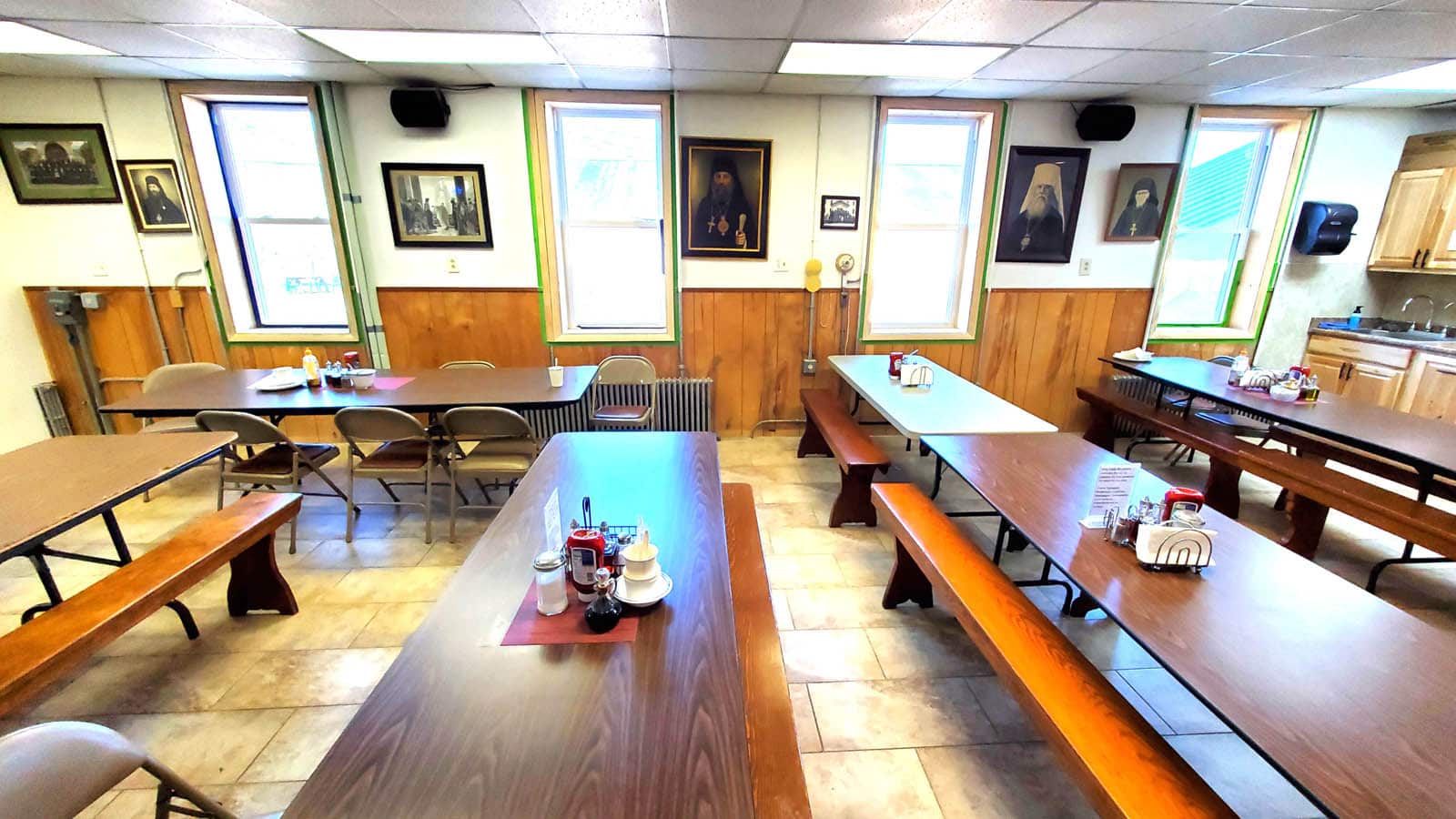
Current projects include the restoration of church mosaics, construction of a carpentry shop, and the creation of new frescoes in the dining hall. Contributions, no matter the size, play a vital role in maintaining this spiritual center for generations to come. Please donate using the button below...

For prayer requests, click here

image
image

Donate By Check

Holy Trinity Monastery
PO Box 36
Jordanville, NY 13361 USA


Memo: Specify "General Donation" or a specific fund.

HOLY TRINITY CATHEDRAL FRESCOES RESTORATION PROJECT

image

Prayer Requests

image

Light A Candle

image

Donate

image

Visit


image

Holy Trinity Monastery
1407 Robinson Rd.
PO Box 36
Jordanville, NY 13361

info@jordanville.org
Telephone: (315) 858-0940
FAX: (315) 858-0505